
Advertisement

The iPhone 18 generation marks an unprecedented shift in mobile display engineering. Rather than iterating quietly, Apple completely overhauled its panel layout, layered in next-generation material science, and introduced unique engineering compromises. Across the fall-released Pro models, the groundbreaking folding panel of the flagship variant, and the spring-scheduled standard editions, the Super Retina XDR system feels vastly transformed.
To evaluate these advancements objectively, we have analyzed every mechanical shift, pixel rearrangement, and software implementation. The following comprehensive breakdown ranks the screen features of the iPhone 18 OLED display line based on their real-world impact, engineering innovation, and technical performance.
The Definitive Features Ranking
Advertisement
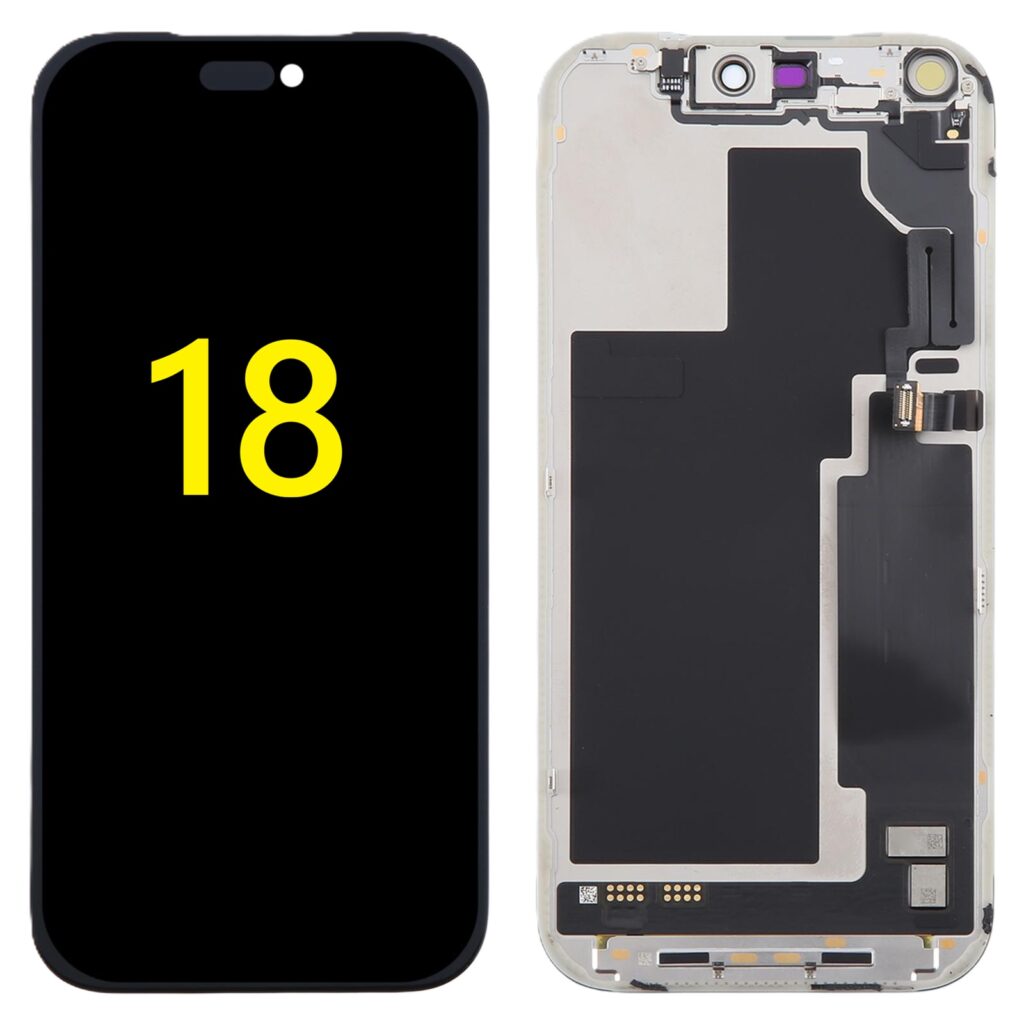
The table below provides a quick, scannable look at how the display capabilities of this generation stack up against each other:
| Rank | Display Feature | Primary Benefit | Availability |
| 1 | Under-Display Face ID Integration | Shrinks Dynamic Island by 25% | Pro & Pro Max Models Only |
| 2 | Ultra-Low Power LTPO+ Backplane | Full Oxide driving for power conservation | Pro Series & Premium Foldable |
| 3 | Multi-Layer Nano-Texture Finish | Eliminates reflections and crease visibility | Flagship Folding Model Only |
| 4 | 3,000 Nits Outdoor Peak Luminance | Superior visibility under direct midday sun | Entire iPhone 18 Lineup |
| 5 | Triple-Activity Dynamic Island | Shows up to three live tracking app widgets | Pro & Pro Max Models Only |
| 6 | Baseline 120Hz ProMotion Expansion | Smooth scrolling on standard/budget editions | Standard & Slim Editions |
| 7 | Ceramic Shield 2 Double-Enclosure | Scratch-resistant protection over the panel | All Glass-Backed Models |
1. Under-Display Face ID
The single most significant technical leap in the iPhone 18 Pro series is the relocation of the biometric components beneath the active screen canvas. By stripping the bulky infrared camera from the top punch-hole and embedding it beneath the screen pixels, Apple managed to reclaim a massive amount of visual real estate.
This feature sits at the top of our ranking because it represents the first major spatial redesign since the launch of the Dynamic Island. The physical cutout has shrunk by roughly 25%, radically changing how the phone looks from the front.
Achieving this required a complex sub-surface structure, the supply chain demands were so high that suppliers like BOE were initially locked out of the Pro tier due to strict yield rates on the under-display infrared pathways.
Normal Screen Area: [R][G][B] [R][G][B] [R][G][B] (Dense, Uniform Layout)
Under-Display Corner: [R] [G] [B] [R] [G] [B] (Expanded Gaps for IR Light)
To let the infrared light pass through seamlessly when you unlock the device, the top-left section of the screen right where the clock digits live uses a completely modified pixel grid. The sub-pixel elements are spaced further apart to create miniature transparent corridors.
This creates a distinct trade-off. In specific environments, like a high-contrast setup with pure black text resting on a bright white background, a subtle pixelation or slight color shift is visible to the naked eye. While community reactions on platforms like Reddit are split between users who spot it instantly and those who never notice it, this design choice perfectly illustrates the engineering compromise Apple made to successfully minimize the display cutout.
2. LTPO+ Backplane
While high brightness levels grab headlines, managing power consumption is what makes a modern smartphone usable. The iPhone 18 Pro and Pro Max introduce an advanced LTPO+ display backplane. This new technology replaces the mixed silicon/oxide layouts used in older phones with pure oxide thin-film transistors (TFTs) for both the driving and switching processes across the entire panel.
This update takes second place because it dramatically improves the screen’s efficiency. By standardizing on oxide transistors, the panel gains extremely granular control over the electrical currents running through individual pixels. This means the phone can hold static content at low refresh rates without consuming unnecessary power.
This advanced backplane handles the logic for the variable refresh rates, allowing the panel to drop down to a hyper-efficient 1Hz. This means tasks like the Always-On display, wallpaper dimming, and system notifications draw almost no power from the battery. Combined with the efficiency gains of the 2-nanometer A20 Pro system-on-chip, the LTPO+ layout ensures the display doesn’t compromise the device’s battery life.
3. Nano-Texture Coating
The introduction of Apple’s premium folding model the passport-shaped book-style foldable variant brought with it a highly specialized display finish. The large internal screen features a custom nano-texture finish chemically etched directly into the protective layer.
This is ranked third because of its dramatic impact on usability and glare reduction. Folding screens are typically notorious for mirror-like reflections and highly visible screen creases. Apple’s nano-texture approach solves both problems at once by scattering incoming light rays across microscopic structural etches.
The anti-glare properties are incredibly effective, giving the folding panel a sleek, paper-like matte quality. More importantly, the diffused surface scattering makes the physical center crease look almost entirely invisible under normal indoor and outdoor lighting conditions.
However, because this fragile, high-end matte treatment requires specialized care and is highly expensive to produce, Apple chose to keep it exclusive to its luxury folding form factor, leaving standard glossy glass on the rest of the lineup.
4. 3,000 Nits Brightness
Apple has pushed the maximum outdoor luminance threshold of its displays to an incredible 3,000 nits of peak brightness. This metric represents a huge leap forward for outdoor visibility, ensuring that the screen stays crisp and readable even under harsh, direct midday sunlight.
We’ve placed this feature fourth because, while it provides immediate real-world value, it is limited to specific outdoor scenarios. The display doesn’t run at 3,000 nits continuously; instead, it uses a smart thermal algorithm that triggers this extreme brightness level only when high ambient light sensors detect direct sunlight.
Indoor Ambient Standard: ========= 1,000 Nits
HDR Content Burst: ================== 1,600 Nits
Outdoor Midday Peak: ================================= 3,000 Nits
For typical indoor viewing and standard high-dynamic-range (HDR) playback, the panel runs at a sustained 1,000 nits and peaks around 1,600 nits for HDR highlights. The 3,000-nit maximum is an emergency mode designed to fight glare.
To keep the phone from overheating or draining the battery in seconds, the display works closely with the phone’s thermal systems. If the hardware starts to run too hot, the system will gradually scale back the brightness to protect the internal components, making it a powerful but highly controlled feature.
5. Triple-Live Island
Thanks to the extra screen space cleared up by the under-display Face ID hardware, Apple was able to revamp the software behavior of its status bar. The smaller Dynamic Island on the Pro models can now split and morph to display three simultaneous Live Activities at once.
This feature ranks fifth because it represents a major software optimization of the physical screen space. Previously, the Dynamic Island was limited to tracking two concurrent background tasks, splitting them into a main pill shape and a small detached circle.
The updated layout uses a smarter pixel-switching design:
- Primary Track: A centered pill shape that displays primary data, like active turn-by-turn navigation or media playback controls.
- Secondary Bubble: A small, circular element on the right that shows auxiliary tracking information, like an active timer countdown.
- Tertiary Segment: A newly added element on the left that handles quick notification badges or live food-delivery statuses.
This change transforms the top of the display into an interactive, multi-tasking information hub. It allows you to keep tabs on multiple apps at a glance without having to jump back and forth between full-screen applications.
6. Baseline 120Hz ProMotion
Historically, Apple kept its smooth 120Hz ProMotion refresh rates exclusive to its high-end Pro models. With the rollout of the iPhone 18 lineup, high refresh rates are finally standard across the entire family tree, including the base models and the slim-profile editions.
This feature lands at number six because, while it is a massive upgrade for standard iPhone buyers, it is a catch-up feature that Pro users have enjoyed for years. Bringing 120Hz to the baseline models changes the entire software experience for everyday users. System animations feel incredibly fluid, text remains sharp and legible while scrolling through feeds, and the entire interface feels instantly more responsive.
The standard models use a slightly scaled-back version of the LTPO backplane compared to the Pro tier, meaning they don’t offer the exact same ultra-wide frequency range. However, the ability to scale seamlessly up to 120Hz brings the entry-level models much closer to the flagship look and feel, eliminating the choppy 60Hz scrolling that felt dated on modern devices.
7. Ceramic Shield 2 Wrap
Rounding out our ranking is the structural upgrade to the glass protecting the OLED panel. The entire glass-backed iPhone 18 family features Ceramic Shield 2 formulation. For the first time on the Pro models, Apple has used this advanced glass formulation on both the front display panel and the rear color-matched back glass.
This feature sits at seventh place because it focuses entirely on durability rather than adding new visual capabilities. Ceramic Shield 2 uses a specialized dual-ion exchange process that embeds microscopic ceramic crystals directly into the glass matrix.
The primary benefits are clear:

- Micro-Abrasion Defense: Significantly reduces the fine scratches caused by keys, coins, or sand grains in your pocket.
- Impact Resistance: Offers a rugged defense against accidental drops on hard, unforgiving surfaces like concrete or asphalt.
- Anti-Reflective Chemistry: Features a specialized coating baked right into the glass to help cut down on distracting ambient reflections.
While it doesn’t change the pixel quality or add new software tricks, this structural shield is essential for keeping the high-end OLED display protected and pristine over years of daily use.
Detailed Model Breakdown
To see how these ranked features are distributed across the actual retail lineup, let’s look at the technical specifications for each individual model variant:
The Ultra-Premium Tier
The high-end flagships showcase Apple’s absolute best display tech, featuring the smallest cutouts, the highest refresh rate control, and the most advanced backplane engineering.
- IPhone 18 Pro: Equipped with a 6.3-inch all-screen Super Retina XDR OLED panel with a crisp 2622-by-1206 resolution at 460 pixels per inch (ppi). It includes the compact Dynamic Island, under-display Face ID pathways, and the power-saving LTPO+ backplane.
- IPhone 18 Pro Max: Scales the exact same elite tech up to a massive 6.9-inch footprint with a 2868-by-1320 resolution. This model offers the ultimate canvas for watching HDR video, gaming, and managing multiple live app activities at once.
The Standard Tier
The standard lineup brings premium display speeds to a more accessible price point, though these models skip the under-display biometrics to help keep costs down.
- Standard iPhone 18: Features a comfortable 6.3-inch OLED panel with a 1.5K resolution layout. It finally gains the fluid 120Hz ProMotion upgrade, but sticks with the traditional, larger Dynamic Island cutout since its Face ID components remain inside the main notch assembly.
- iPhone 18e: A budget-friendly alternative that uses a slightly less power-efficient OLED panel and lower peak brightness caps to hit a more aggressive price point.
The Specialty Tier
These unique form factors introduce entirely new ways to interact with iOS, using innovative shapes and custom screen coatings.
- iPhone 18 Air: A hyper-thin, lifestyle-focused model that prioritizes a sleek design. It uses a specialized, low-profile OLED panel designed to minimize thickness while still delivering 120Hz ProMotion speeds.
- iPhone Duo: Apple’s high-end folding flagship. It features a pocketable 5.4-inch external display for quick tasks, and opens up to reveal a massive, 7.6-inch flexible internal OLED canvas. This interior screen is uniquely treated with an anti-reflective nano-texture matte finish to minimize glare and keep the center crease hidden.
Supply Chain Dynamics

Building these advanced displays requires a massive, highly sophisticated global supply chain. The underlying technology behind the iPhone 18 series relies on a fierce competition between the world’s leading panel manufacturers.
For this generation, Apple had to split its orders based on strict technical milestones:
- Samsung Display: Handled the lion’s share of production for the high-end Pro and Pro Max panels. Samsung’s advanced manufacturing facilities were critical for flawlessly producing the under-display pixel layouts needed for Face ID to function.
- LG Display: Stepped up as a primary co-supplier for the premium Pro tiers. LG successfully met Apple’s demanding quality control standards for the ultra-efficient LTPO+ oxide backplanes.
- BOE (Beijing Oriental Electronics): Ran into technical hurdles with the under-display infrared sensors, which kept them out of the Pro supply chain early on. Instead, BOE focused its manufacturing power on supplying the 120Hz panels for the standard iPhone 18 and iPhone 18e models, helping Apple maintain strong pricing leverage across the board.
Final Purchasing Advice
This generation highlights that phone displays have reached an impressive level of maturity. If you are using an older iPhone 16 Pro or a recent iPhone 17 Pro, the screen specs on the newer models will feel very familiar. The peak brightness, color tuning, and overall contrast ratios offer a refined, evolutionary step forward rather than a complete overhaul.
The real value of this upgrade depends entirely on what phone you are coming from:
- Upgrade for Pro Users: If you are coming from an older device like an iPhone 14 Pro or 15 Pro Max, jumping to the 18 Pro series will feel massive. You’ll get a noticeably larger screen area, a much less intrusive Dynamic Island, and incredible outdoor visibility under direct sunlight.
- Upgrade for Standard Users: If you typically stick to the base models, the standard iPhone 18 is a huge milestone. Finally moving away from old 60Hz limitations and getting the buttery-smooth 120Hz ProMotion experience completely changes how fluid and fast the phone feels in everyday use.
The iPhone 18 OLED lineup shows that Apple is willing to make bold engineering trade-offs like rearranging pixels in the corner of the screen to claw back every millimeter of display space, resulting in one of the most capable and well-rounded mobile screens on the market.
Advertisement